Warehouse News: 7 Things to Know This Week
 By Warehouse Insider · Aug 17, 2026 · 3 min read
Warehouse operators entered the week with developments spanning network expansion, automation, consolidation and an increasingly physical form of supply chain risk. Walmart is considering another enormous fulfillment investment, Ocado has taken its automation platform into a major Asian market, DP World is expanding its warehouse footprint, while the latest attack on Wildberries demonstrates that logistics facilities themselves are becoming strategic targets. Here are seven developments warehouse professionals should have on their radar.
1. Wildberries Warehouse Burns After Major Ukrainian Drone Attack
A Wildberries logistics facility in Koledino in the Moscow region was damaged during a large Ukrainian drone attack on August 16, with Reuters footage showing heavy smoke rising from the warehouse. The incident is part of a broader Ukrainian campaign targeting Russian logistics and economic infrastructure. For warehouse executives outside the conflict zone, the development carries a wider lesson: distribution centers are no longer merely facilities exposed indirectly to geopolitical disruption. Large logistics hubs can themselves become critical infrastructure targets, putting physical security, network redundancy and business continuity higher on the warehouse risk agenda. Read the full story
2. Ocado Opens Its First Automated Fulfillment Center in South Korea
Ocado and Lotte Shopping have launched their first automated customer fulfillment center in South Korea. Located in Busan, the facility will serve a catchment of approximately four million households across Busan and the wider Yeongnam region. The opening is an important international test for Ocado's technology after some of its large automated CFC relationships in North America faced setbacks. For warehouse operators, the project will provide another data point in the debate over where highly automated centralized fulfillment delivers better economics than store-based or more distributed models.
3. DP World Takes Over Six UK Grocery Logistics Sites From GXO
DP World has agreed to take over six UK contract logistics sites from GXO Logistics, adding more than two million square feet of warehouse capacity and approximately 2,000 employees. The transfer was required as a regulatory condition attached to GXO's acquisition of Wincanton. Strategically, however, it also strengthens DP World's position further inland. The company increasingly competes not simply as a port operator but as an end-to-end logistics provider connecting ports, transportation and warehousing within the same network.
4. Walmart Plans a 1.5 Million-Square-Foot New York Fulfillment Center
Walmart is considering construction of a roughly 1.5 million-square-foot fulfillment facility in Wallkill, New York, after filing plans with local authorities in July. The proposed development would include substantial truck courts, loading infrastructure and dedicated truck parking. The scale matters beyond Walmart: despite years of discussion around smaller, distributed fulfillment networks, major retailers are still prepared to invest heavily in very large facilities where throughput, automation and transportation density justify the economics.
5. Warehouse Automation Is Moving From Robot Selection to Integration
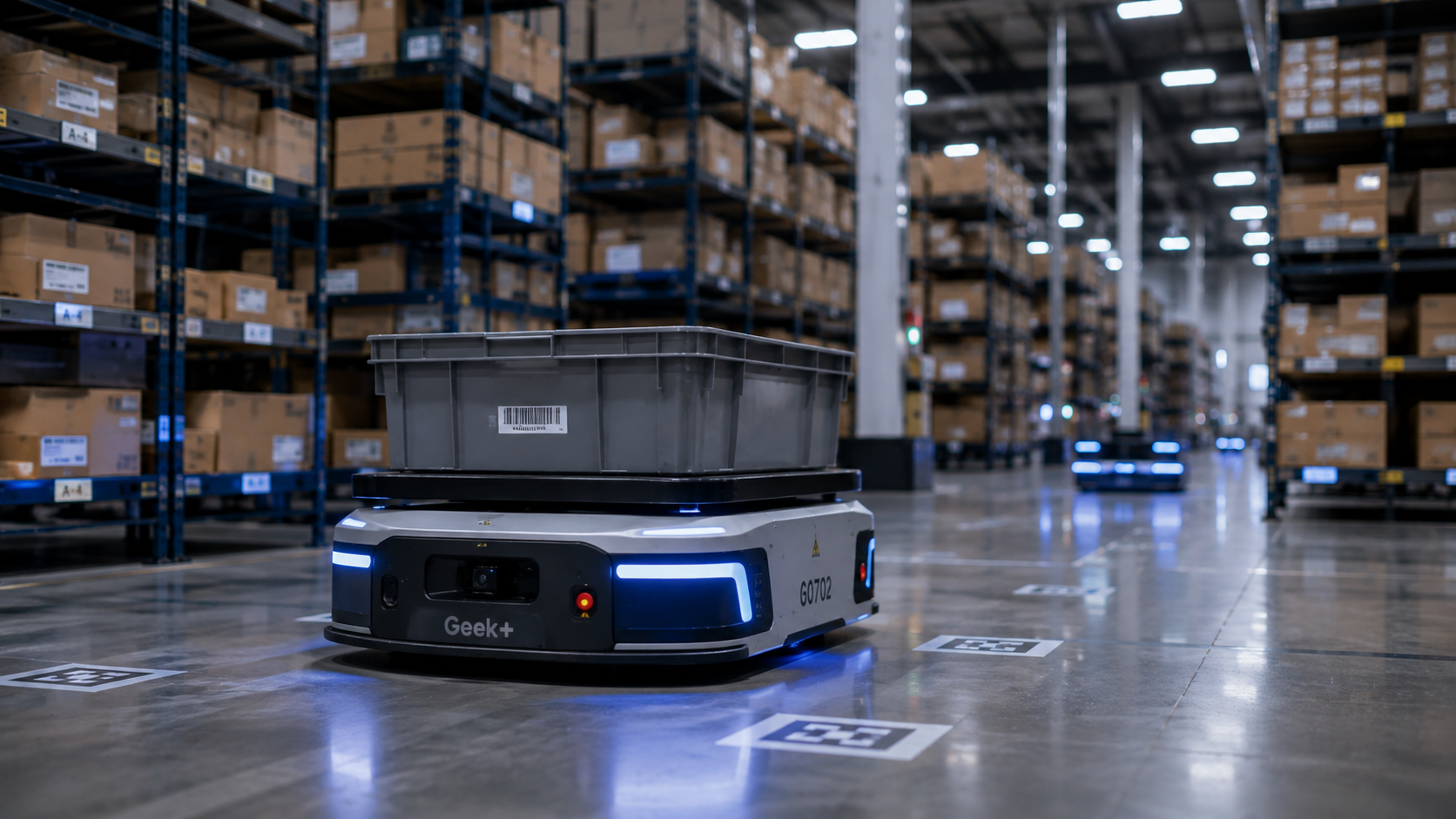
The next bottleneck in warehouse robotics may increasingly be software integration rather than hardware. DHL Supply Chain is deploying SVT Robotics' SOFTBOT platform across its global warehouse network, where more than 8,000 collaborative robots are already operating. DHL says the plug-and-play approach can enable robotics integrations up to 12 times faster than traditional custom coding. The strategic implication is important: as facilities accumulate AMRs, robotic arms, conveyors and other automation from multiple vendors, the ability to connect and reconfigure those systems quickly could become as important as the performance of individual machines.
6. The Mega-Warehouse Is Not Disappearing
Walmart's New York proposal and the continued development of large automated CFCs highlight a broader point for warehouse strategy. The industry's move toward distributed fulfillment has not eliminated the economic case for very large buildings. Instead, networks are becoming more segmented. High-throughput automated hubs can coexist with smaller regional and last-mile facilities, with inventory positioned according to velocity, service requirements and transportation economics. For warehouse planners, the question is increasingly not "centralized or distributed?" but which inventory and processes belong at each layer of the network.
7. Warehouse Networks Are Becoming Strategic Assets, Not Standalone Buildings
The week's developments point toward the same structural change. DP World is connecting warehousing more tightly with its wider logistics network, Walmart continues to examine enormous fulfillment infrastructure, and Ocado is exporting highly automated operations into new markets. At the same time, attacks on Wildberries demonstrate the operational consequences when concentrated logistics capacity is disrupted. Warehouse strategy is therefore moving beyond individual-building productivity toward network design: where capacity sits, how quickly it can be redirected, how technologies interact and what happens when a major node becomes unavailable.
For warehouse professionals, this week's news reflects an industry pursuing two objectives that can sometimes conflict: greater concentration and automation to drive efficiency, and greater flexibility and redundancy to manage disruption. The operators that solve both sides of that equation will not necessarily have the most robots or the largest buildings. They will have warehouse networks capable of absorbing new technology, shifting inventory and capacity, and continuing to operate when the assumptions behind the original network design suddenly change.