Warehouse Automation's Next Competitive Advantage Is Adaptability
 By Robin Pattinson · Aug 9, 2026 · 3 min read
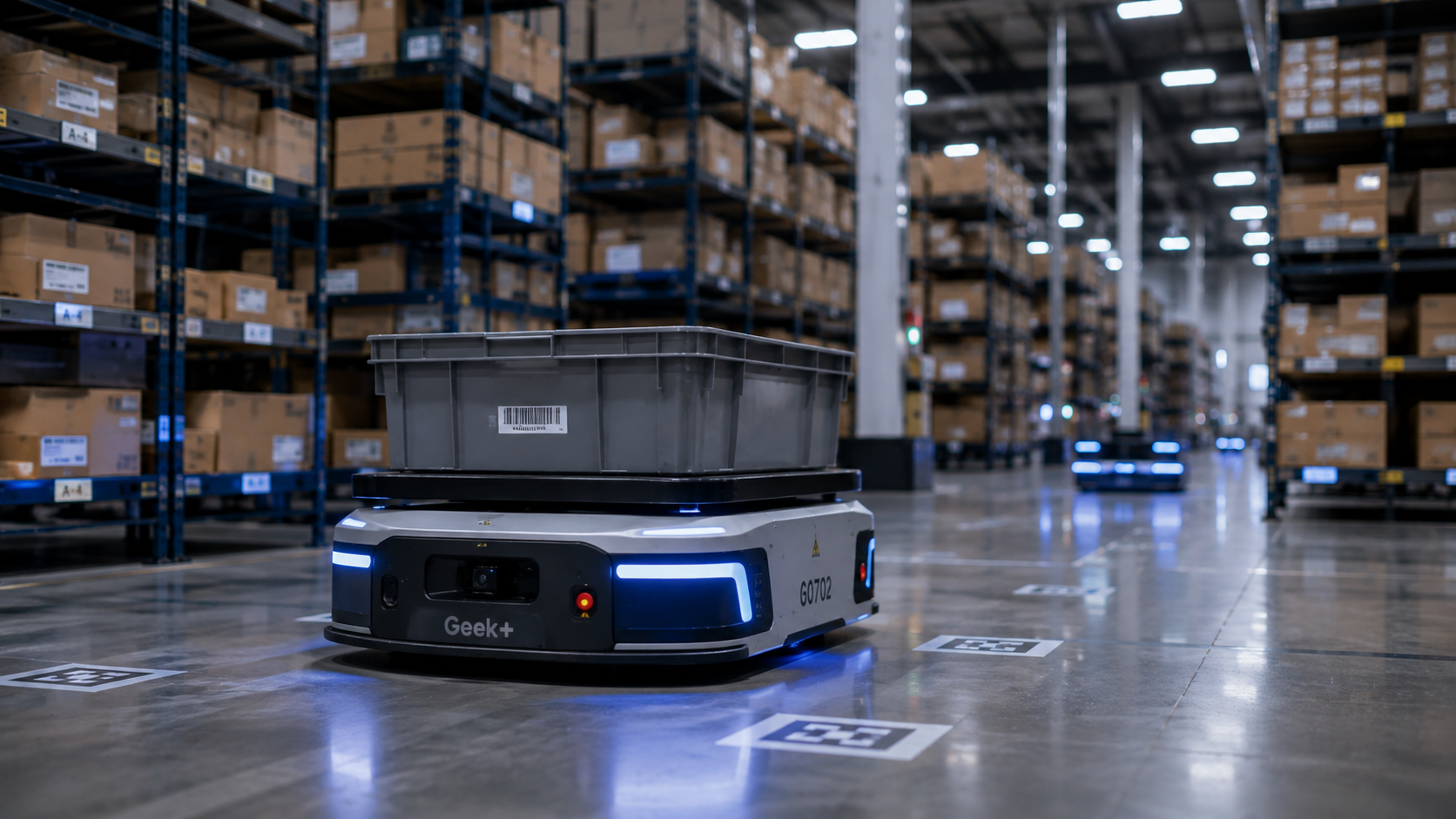
Warehouse managers have spent years investing in faster robots, denser storage systems and higher throughput. Yet many operations are discovering that their biggest constraint is no longer speed. It is the ability to maintain performance when packaging changes, suppliers vary, inbound freight becomes inconsistent and warehouse conditions differ from one shift to the next. As operational variability becomes the norm, adaptability is emerging as the next measure of automation performance.
"We're focused on making our supply chain simpler, faster and more efficient while reducing complexity and keeping goods moving," Mike Gray, Senior Vice President of Supply Chain at Walmart U.S., said when outlining the retailer's latest supply chain strategy. The comment reflects a broader shift taking shape across warehouse operations. After years of investing in robots to move faster, operators are beginning to judge automation by a different standard: how well it performs when conditions are no longer predictable.
From Rule-Based Automation to Physical AI
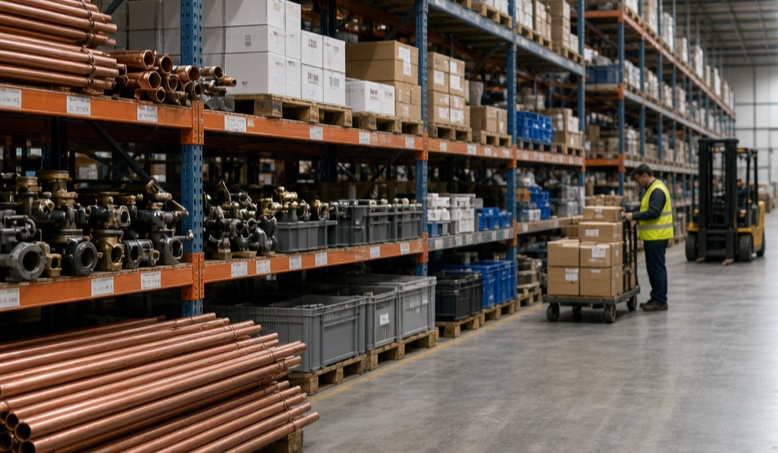
For much of the past decade, warehouse automation has been built around repeatability. Fixed layouts, standardized packaging, controlled lighting and carefully engineered workflows allowed robots to outperform humans in repetitive tasks. But distribution centers now face a very different operating environment. SKU counts continue to grow, packaging formats vary from supplier to supplier, inbound shipments arrive with greater inconsistency, and customer expectations for speed remain unchanged.
The challenge is no longer simply automating warehouses. It is enabling automated warehouses to cope with constant operational variation.
The most ambitious vision comes from Rhoda AI, whose co-founder and CEO Jagdeep Singh argues that industrial robotics has reached the limits of traditional rule-based automation. In an exclusive guest article prepared for The Supply Chainer, Singh writes that today's robots remain heavily dependent on structured environments where every variable has been engineered in advance. As warehouse operations become increasingly dynamic, that approach becomes progressively less effective.

Instead of teaching robots individual tasks, Singh believes future systems will learn how objects behave in the physical world, allowing machines to recognize unfamiliar situations and adapt rather than stop when something unexpected occurs. In his view, the next generation of warehouse automation will not simply execute instructions more efficiently - it will understand physical environments well enough to respond to changing conditions without extensive reprogramming.
Building Toward Smarter Automation
That vision may still be emerging, but many warehouse operators are already taking incremental steps toward greater flexibility. Swedish material handling specialist FlexQube recently announced a $400,000 order from a new U.S. commercial vehicle manufacturer. Significantly, the project involves mechanical material handling carts rather than autonomous mobile robots. The company described the deployment as an entry point designed to establish operational improvements before expanding into broader automation initiatives.
The strategy reflects a pattern becoming increasingly common across manufacturing and warehouse operations. Rather than replacing existing infrastructure in a single transformation, many organizations are introducing modular equipment that standardizes internal material flow first, creating a foundation for robotics and automation to be layered on later.
Computer Vision Moves Closer to Operations
A similar trend can be seen outside traditional warehousing. Healthcare technology company AssistIQ recently highlighted how computer vision is being integrated directly into hospital supply chain workflows. In one documented case, the system detected that a surgical implant had expired immediately before use, preventing it from reaching a patient. Although the application targets clinical environments, the underlying capability mirrors a growing requirement inside warehouses: AI systems that continuously validate inventory, detect exceptions in real time and intervene before operational errors become expensive disruptions.
The broader market appears to be moving in the same direction. According to Gartner, by 2030 approximately 50% of new warehouses in developed economies are expected to be robot-centric facilities, with autonomous systems performing most operational handling tasks while human workers increasingly manage exceptions and oversight.
Meanwhile, Interact Analysis estimates the global warehouse automation market will exceed $57 billion by 2030, driven less by labor replacement than by demand for higher throughput, greater flexibility and more resilient fulfillment operations.
For warehouse operators evaluating automation investments today, the critical question is no longer how quickly a robot performs under ideal conditions. It is how effectively an automated operation continues performing when suppliers change packaging, demand shifts overnight or unexpected exceptions begin appearing on the warehouse floor. In an industry where variability has become the norm, adaptability is becoming just as important as speed.