Cargo Theft Moves From the Highway to the Warehouse Dock
 By Robin Pattinson · Sep 9, 2026 · 4 min read
A driver arrives at a warehouse with legitimate-looking paperwork, a verified carrier profile and the correct shipment information. The load is released without incident. Hours later, when it fails to reach its destination, the legitimate carrier claims no knowledge of the pickup. The driver was an impersonator, the credentials were fabricated and the freight has disappeared.
For warehouse operators, this scenario reflects a fundamental shift in cargo theft. Criminal networks are moving beyond trailer break-ins and highway hijackings. They increasingly use compromised email accounts, lookalike domains, cloned carrier profiles, purchased identities and unauthorized double brokering to collect freight directly from distribution centers. The warehouse dock has become the primary point at which a fraudulent pickup either succeeds or is stopped.
Strategic Theft Exploits Warehouse Workflows
North American cargo theft rose 27% year over year in 2024, while the average loss per incident increased from $187,895 to $202,364, according to Verisk CargoNet. Nearly $725 million in cargo was stolen across the United States and Canada in 2025, a 60% increase from 2024, according to FBI and CargoNet data.
Strategic theft involving cyber fraud and identity manipulation has increased 1,500% since 2021, according to the American Trucking Associations, citing CargoNet data. Munich Re Specialty and BSI Consulting estimate that strategic fraud now accounts for 30% of US cargo theft incidents.
Warehouse operations are particularly vulnerable because many of the practices criminals exploit are operationally normal. Subcontracted drivers may be unfamiliar, carrier assignments can change shortly before collection and dock teams are expected to keep freight moving. A well-prepared impersonator can use accurate shipment information and convincing documents to make an unauthorized pickup appear routine.
"Cargo theft has largely shifted from physical break-ins to strategic fraud and digital deception, meaning that cybercrime has moved off the network and onto the loading dock," said Al Finateri, Manager, Business Development at Geotab, in written responses to The Supply Chainer. "Fraudulent carriers are exploiting manual, paper-based verification the same way a hacker probes for a weak password. Cloned credentials, driver impersonation and unauthorized double brokers, quietly re-brokering a load to an unvetted carrier without the shipper's knowledge, are repeatable attack methods that are run at scale across the industry. Since verification is so often treated as a formality, manual gate checks are critical breach points that cargo thieves systematically exploit."

Throughput Pressure Creates an Opening
Speed is a key warehouse performance requirement, but it can also undermine pickup controls. When loading schedules are tight, employees may treat verification as an administrative step rather than a condition for releasing freight.
Criminals deliberately create or exploit urgency. They may arrive near the end of a shift, claim that a dispatch change was made at the last minute or pressure personnel to avoid delaying a time-sensitive shipment. If the dock team relies only on the documents presented by the driver, the facility may have no independent confirmation that the pickup is authorized.
Warning signs include driver or carrier substitutions that do not match dispatch records, credentials that cannot be independently confirmed, unfamiliar email domains, unusual subcontracting arrangements and requests to bypass identification procedures.
Warehouse managers must ensure that employees can stop a pickup without being penalized for reducing throughput. A verification process is ineffective if operational targets encourage workers to override it.
Independent Verification Must Precede Load Release
A driver possessing the correct load number is no longer sufficient evidence of authorization. Warehouse teams must independently reconcile the driver's identity, carrier credentials, vehicle information and dispatch instructions before the trailer is loaded or the yard barrier is opened.
"Fraudulent pickups today are often executed through identity-based deception. Criminals impersonate legitimate carriers using compromised email accounts, lookalike domains, or purchased carrier identities to secure loads and redirect shipments before anyone realizes the carrier is not who they claim to be," Keith Lewis, Vice President of Operations at Verisk CargoNet, said in written responses to The Supply Chainer. "We advise distributors and logistics providers to take a multi-layered approach to security by strengthening driver identification procedures, independently verifying carrier credentials with trusted broker or carrier contacts before releasing freight, and closely reviewing subcontracting and shipment documentation at the point of pickup. As cargo theft schemes become increasingly sophisticated, intelligence-sharing and layered verification remain critical components of cargo security."
Independent verification means using contact details already held in an approved carrier-management system. Calling a telephone number provided by the arriving driver or included in a suspicious email may simply reconnect the warehouse with the criminal network.
Any unexplained discrepancy should automatically pause the release process. Warehouse personnel should not be expected to determine whether the inconsistency is innocent while the driver waits at the dock.
Technology Turns Verification Into an Operational Lockout
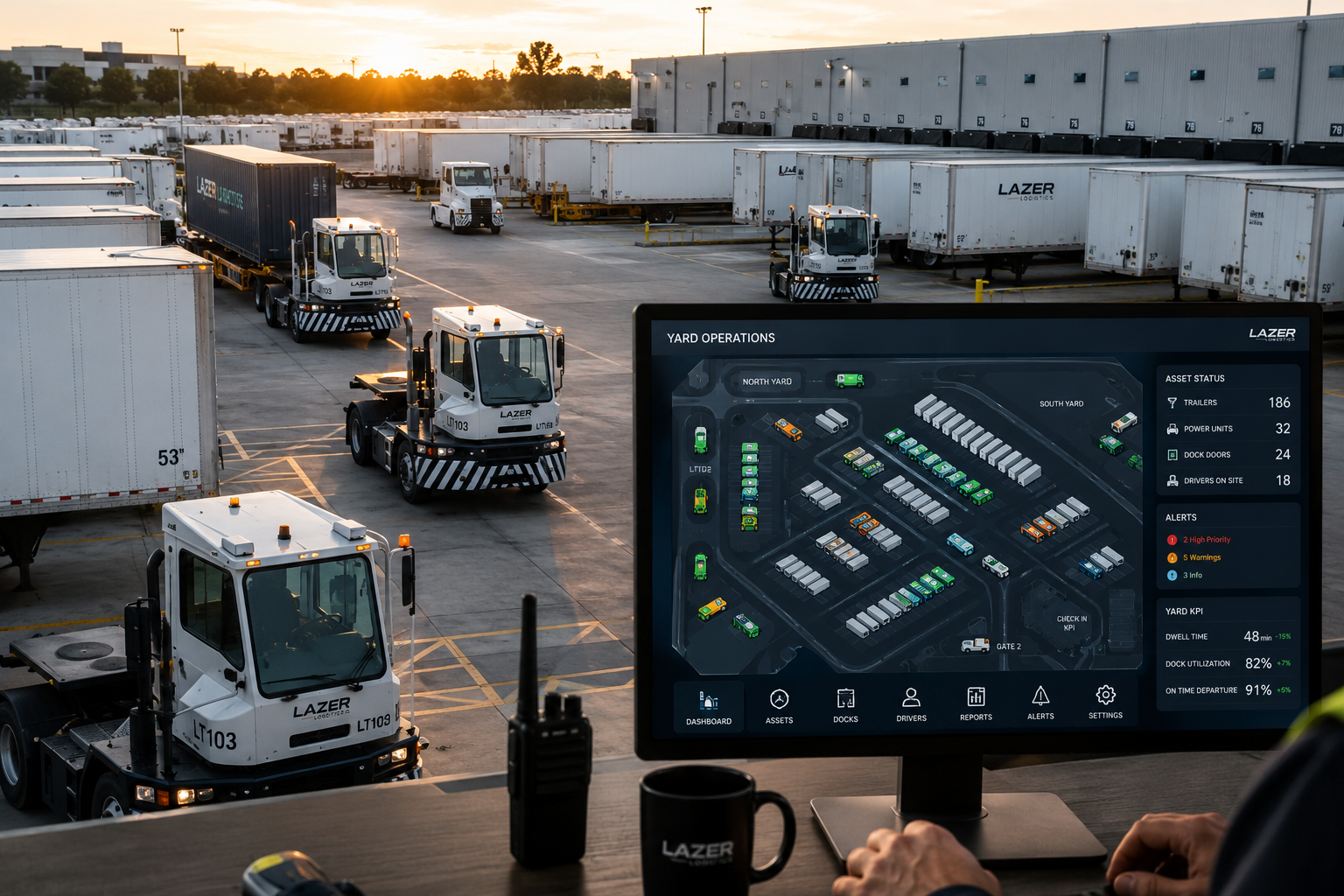
Facilities are beginning to replace manual red-flag procedures with automated controls. Transportation Management System dispatch records can be cross-checked against driver identification, carrier authority, tractor details, license-plate data and GPS location.
The system can prevent dock assignment or load release when the information does not align. This converts verification from a recommendation into an enforceable operational rule.
Video or photographic driver verification can authenticate the individual, while license-plate recognition and telematics confirm that the expected vehicle is present. Geofencing can identify route deviations after departure, and integrated gate and dock systems can preserve a complete record of who collected the freight, in which vehicle and under whose authorization.
Automation does not eliminate the need for trained warehouse personnel. It gives them a clear escalation path and removes pressure to make subjective decisions based on paperwork, appearance or a driver's explanation.
Warehouse Security Must Extend Beyond the Perimeter
Fences, locks, cameras and guards remain necessary, but they cannot stop a thief whom the warehouse mistakenly authorizes to collect a load. Perimeter security protects against forced entry. Fraudulent pickups exploit legitimate access processes.
The most effective warehouse controls combine physical security with transportation and operational data. Gate personnel, dock supervisors, transportation teams, loss-prevention staff and carrier managers need access to the same verified information and escalation procedures.
Facilities should also retain images, identification records, vehicle details, timestamps and communications associated with every pickup. These records support investigations, but more importantly, they allow operators to identify recurring discrepancies before they become losses.
The central warehouse-security question is no longer whether the driver has the correct paperwork. It is whether the driver, vehicle, carrier, dispatch record and shipment authorization have all been independently verified before the freight leaves the dock.