Yard Congestion Is Emerging as One of the Biggest Threats to Warehouse Throughput
 By Robin Pattinson · Jul 31, 2026 · 3 min read
Many warehouse delays begin long before inventory reaches a dock door. A trailer arrives early and cannot be unloaded. Another is parked in the wrong location. Several inbound loads reach the facility within the same hour, overwhelming receiving operations and forcing warehouse teams to reshuffle labour plans. Within a short period, dock schedules slip, forklift travel increases and detention costs begin to accumulate.
As distribution centres process larger freight volumes without significantly expanding labour or physical infrastructure, the yard is becoming a critical operational environment. What was once treated as trailer parking space is increasingly viewed as an active part of warehouse execution.
Congestion often comes from timing, not volume
Many warehouse operators assume congestion is caused by excessive freight volume. In practice, timing often creates the larger problem.
When inbound arrivals cluster into compressed windows, receiving teams struggle to maintain flow even when sufficient dock capacity exists. Forklift drivers spend more time waiting. Dock doors sit occupied longer. Labour plans become difficult to execute.
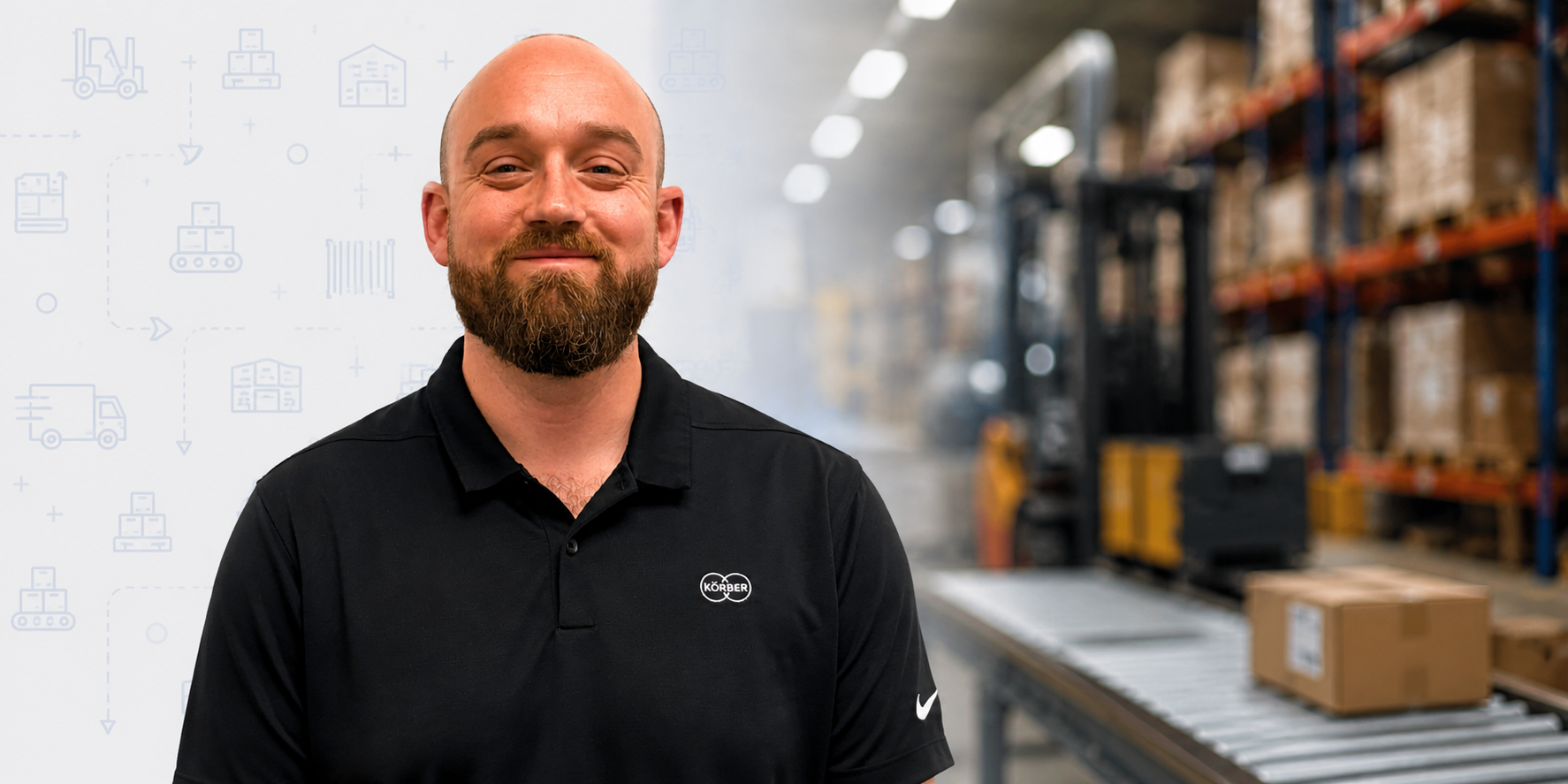
In a written response to Warehouse Insider, Austin Percifull, Global Key Account Manager at Körber Business Area Supply Chain, said the issue is frequently linked to synchronization rather than freight levels.
“From a labor and congestion standpoint, most dock pain comes from clustering, not total volume. AI forecasts hour-by-hour arrivals so labor plans and pick waves align with inbound flow, while optimizing door assignments to reduce forklift travel and idle time.”
The challenge is growing across large distribution environments. According to Deloitte, warehouse operators continue to rank labour productivity and facility throughput among their most significant operational concerns as distribution complexity increases. At the same time, e-commerce growth continues to create more frequent fluctuations in inbound and outbound activity.
Providers including Blue Yonder, Manhattan Associates and Oracle have expanded investments in yard management and dock scheduling capabilities as facilities seek better coordination between transportation and warehouse operations.
Yard management is becoming a technology category of its own
Historically, many facilities managed trailer activity through spreadsheets, radio communication and manual yard checks. That approach becomes difficult to scale when hundreds of trailers move through a site each day.
Modern Yard Management Systems (YMS) are increasingly being used to coordinate gate activity, dock assignments, appointment schedules and trailer positioning through a single operational platform. The goal is not simply visibility. It is continuous coordination.
Several warehouse operators are also combining software with dedicated yard operations providers to create tighter links between transportation arrivals and warehouse execution.
The result is greater control over trailer dwell times, dock utilisation and labour deployment.
Real-time orchestration is replacing static scheduling
The limits of traditional scheduling become most visible during disruptions.
Port bunching, carrier delays, weather events and sudden inbound surges can overwhelm static appointment calendars within hours. Warehouse teams then spend valuable time reacting instead of executing.
Percifull said real-time orchestration systems are increasingly being deployed to address those situations before congestion spreads across the site.
“When warehouses are hit with sudden 30% inbound spikes driven by port or carrier bunching, the difference in the first 24 hours is that AI-powered dock scheduling and yard orchestration systems can respond in real time, while traditional appointment calendars cannot.”
The operational significance extends well beyond transportation. Trailer movement affects receiving performance. Receiving performance affects labour allocation. Labour allocation affects inventory flow inside the building.
As warehouses continue searching for capacity gains without major expansion projects, the yard is receiving far greater attention than it did a decade ago. For many operators, improving throughput now depends as much on coordinating trailers outside the building as managing inventory inside it.