Warehouses Are Drowning in Data but Still Struggle to Make Faster Decisions
 By Robin Pattinson · Jul 27, 2026 · 3 min read
Modern warehouses generate enormous amounts of information. Inventory movements, labour activity, equipment utilisation, order status and automation events are recorded constantly across dozens of systems. Yet many operators continue to face the same challenge: making the right decision quickly enough to affect the outcome.
The issue is rarely a lack of data. More often, it is the gap between information and action. Warehouse teams may know what happened yesterday and what is happening now, but they still struggle to determine what should happen next. As fulfilment operations become more complex, that delay is becoming increasingly expensive. The conversation is shifting away from visibility and towards decision-making itself.
More data does not automatically create better outcomes
Many organisations spent years investing in dashboards, reporting tools and large-scale data platforms.
Those investments improved transparency, but they did not always improve execution.
In a written response provided to Warehouse Insider, Keith Moore, CEO of AutoScheduler, argued that many companies collect information that never contributes to operational decisions.
“Companies spend all this time building a data lake with a bunch of data in it that never gets used because it’s not the data that informs the decision.”
The challenge is becoming more significant as warehouse environments grow more automated. According to a Gartner supply chain survey, data quality and decision-making remain among the most common barriers to achieving value from advanced analytics and AI initiatives. Separately, MHI's annual industry report continues to identify digitalisation and data utilisation among the leading priorities for warehouse and supply chain leaders.
Technology providers including AutoScheduler, Aera Technology and Blue Yonder are increasingly focusing on decision orchestration rather than traditional reporting. The goal is to help operators determine what action should happen next rather than simply display operational status.
Complexity is overwhelming traditional approaches
Warehouse operations now involve more moving parts than at any point in the past decade.
Labour shortages, fluctuating order volumes, automation systems, transportation disruptions and changing inventory profiles all interact with one another. Decisions that once affected a single process can now influence multiple functions across a facility.
In a written contribution to Warehouse Insider, Gonzalo Benedit of Aera Technology said many organisations are struggling to manage the growing scale and speed of operational complexity.
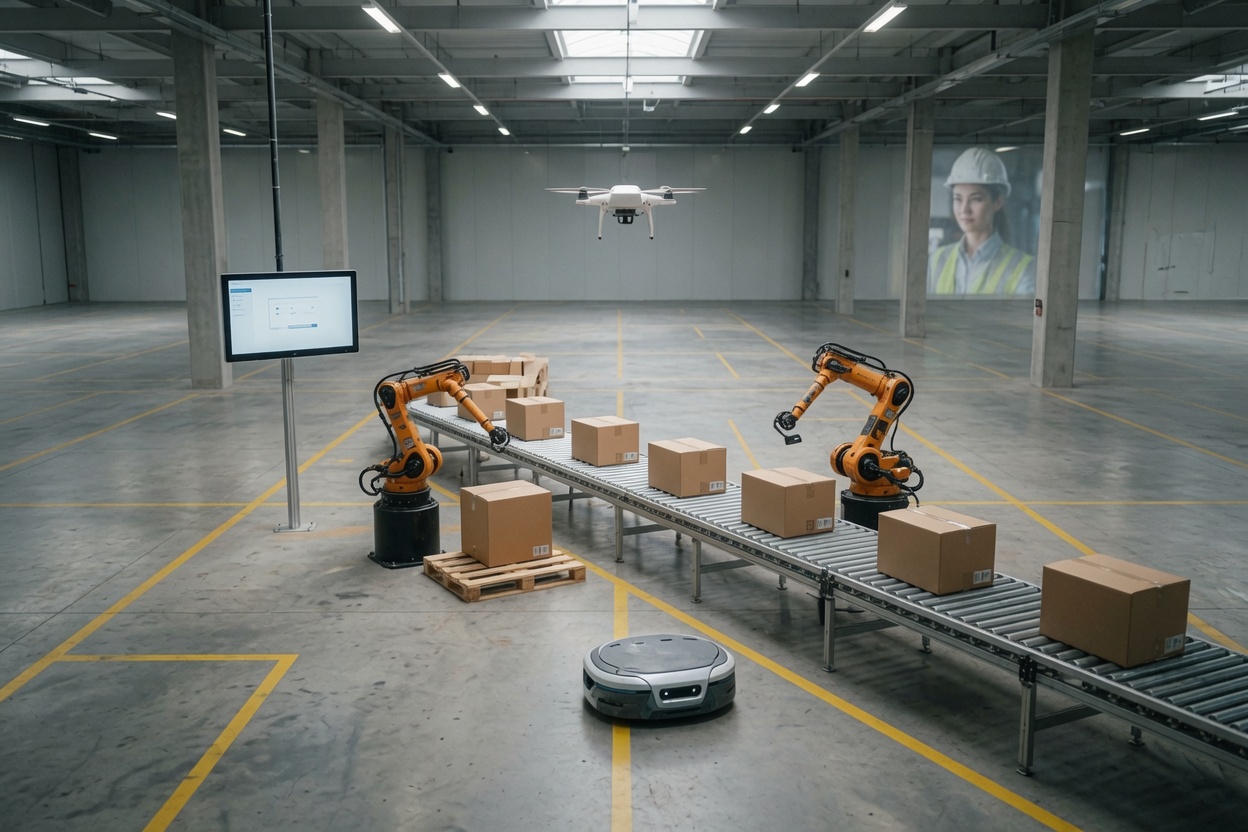
“When I look at today’s reality, what we see very often is human dealings with a level of complexity, scale and speeds that they are unable to handle. The way they look at the problem requires a lot of manual coordination and leaves a lot of decisions on the table.”
The consequence is often operational delay. Teams spend time validating information, coordinating across departments and deciding who should act first. Valuable opportunities disappear while organisations attempt to align people and systems around a response.
The next challenge is decision velocity
For many years, warehouse technology discussions focused on visibility.
Can operators see inventory? Can they monitor orders? Can they track assets?
Those questions remain important, but a new challenge is emerging. Once information becomes available, how quickly can the organisation respond?
Decision velocity is becoming a critical performance metric. The faster a warehouse can identify a problem, prioritise the response and execute corrective action, the lower the operational impact.
That does not necessarily require more automation. In many cases, it requires better coordination between systems, processes and people.
As warehouses continue to increase throughput without proportionally increasing labour or physical capacity, the ability to transform information into action may become one of the most important competitive advantages available. Data is no longer the scarce resource. Effective decisions are.