Returns Fraud Detection Moves Upstream as Apparel Volume Strains Reverse Logistics
 By Robin Pattinson · Aug 12, 2026 · 3 min read
Return fraud now accounts for roughly 9 percent of all returns in U.S. apparel retail, forcing reverse logistics operators to redesign inspection workflows that historically treated verification as a final warehouse gate rather than a real-time control point. The operational challenge is acute: customers expect instant refunds, yet sophisticated wardrobing schemes and bracket-return abuse patterns require physical validation before credit is issued. Platforms are responding by moving fraud detection as far upstream as possible, often to the point of drop-off, to compress cycle time without sacrificing margin protection.
According to the National Retail Federation, U.S. return fraud cost retailers $101 billion in 2023, with apparel and footwear categories representing the highest risk due to lenient return windows and high bracketing behavior. Traditional mail-based return processes, where items ship back and sit for days before inspection, no longer align with the speed or fraud sophistication operators now face.
Verification at Drop-Off Rather Than Final Gate
Juan Hernandez-Campos, COO at Happy Returns, a reverse logistics network operating consolidated drop-off locations, described the operational tension in a written response to Warehouse Insider. "Return fraud is a real cost for retailers, showing up in about 9 percent of all returns today, and it keeps getting more sophisticated. At the same time, customers expect refunds fast, sometimes instantly. That tension between speed and scrutiny is the core challenge for any reverse logistics network. Our approach is to build verification into the earliest possible moment rather than treating it as a final gate. At drop-off, we visually verify the item and scan its barcode. If anything trips a risk factor, we pause the refund immediately. The item then moves to our warehouse, usually within a couple of days, and goes through Return Vision, our AI-powered inspection tool, before we make a final call. The hard part is doing this fast enough that it doesn't create extra customer service friction, while still protecting the business."
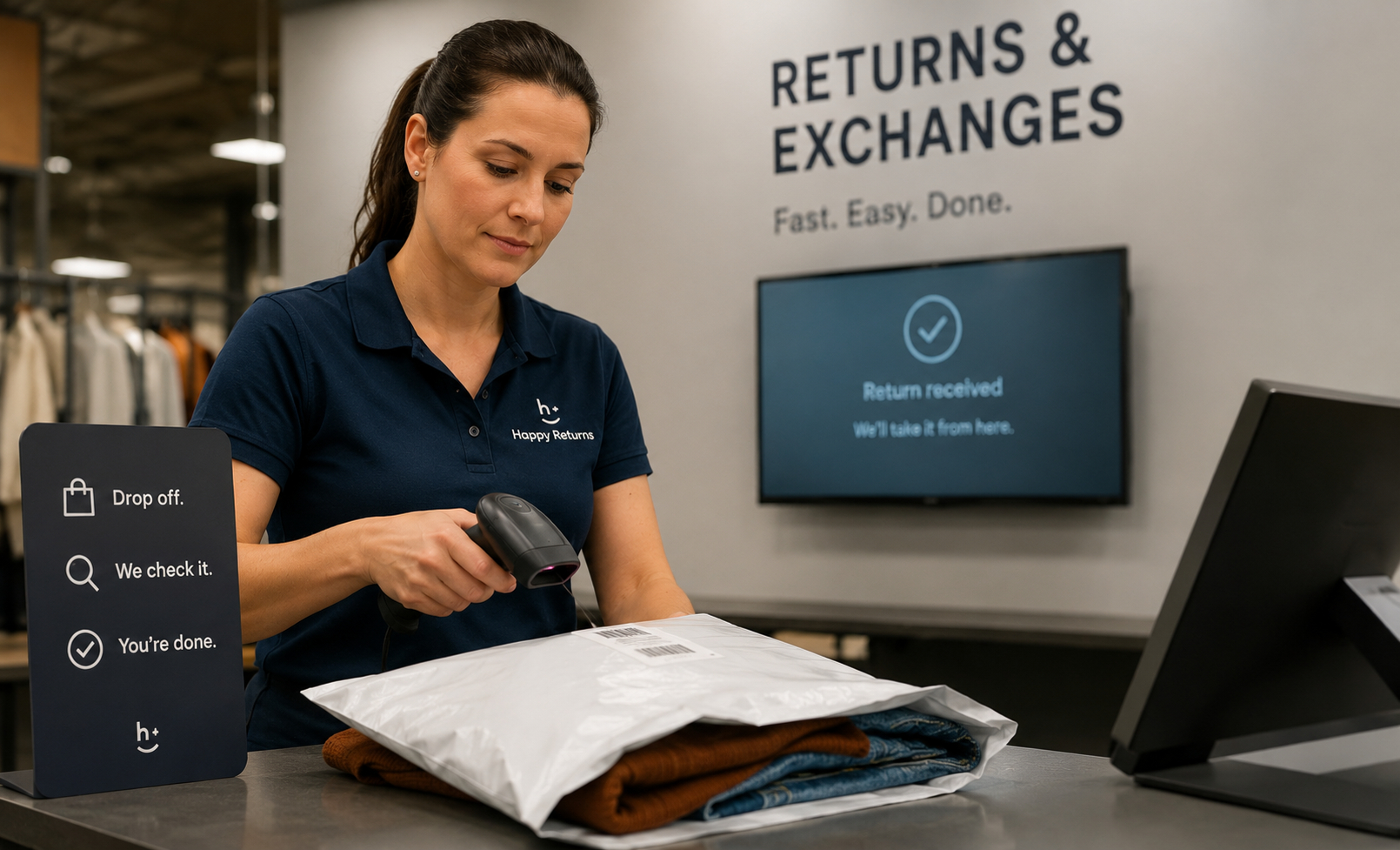
The shift from end-of-line inspection to real-time validation changes the economics of reverse logistics. Pausing a refund at drop-off costs less than issuing credit for wardrobed merchandise discovered weeks later during warehouse sorting. The operational cost of fraud detection is lower when deployed at intake than when embedded in downstream exception handling.
Processing Centers Balance Fraud Flags and Throughput
Downstream workflows now incorporate cross-merchant returner behavior data to flag high-risk patterns before items reach consolidation centers. Hernandez-Campos explained the structural advantage in a written response to Warehouse Insider. "The traditional mail return process is broken for this. An item ships back, sits for a while, and by the time it's inspected, the customer's already calling support. That delay is costly and erodes the loyalty you're trying to protect. So we're moving inspection as far upstream as possible, ideally to drop-off, instead of leaving it to the end. We also use data across merchants to flag returner behavior patterns tied to higher fraud risk, so those returns get a second look in the first few days, not weeks later."
Dani Wanderer, CMO at Ada, a customer service automation platform with returns orchestration capabilities, highlighted the operational speed advantage of AI-driven platforms in a statement previously provided to Warehouse Insider. "When a major product recall or post-holiday returns wave hits, an AI returns platform can achieve transformative results in the first 48 hours that traditional processes simply cannot match. By leveraging machine learning and real-time data analysis, these platforms can instantly categorize and prioritize returns based on factors like product condition, return reason, and customer history. This allows retailers to quickly identify and quarantine affected items in a recall scenario, or efficiently process high volumes of returns during peak periods. AI can also automate decision-making for refunds, exchanges, or restocking, significantly reducing processing time and improving customer satisfaction while minimizing fraud losses."
The competitive pressure on reverse logistics networks is clear: operators that can validate returns without creating multi-day bottlenecks gain merchant retention, while those still relying on sequential mail-based inspection risk losing volume to faster alternatives.