Physical AI Is Emerging as the Missing Layer Between Warehouse Systems and Reality
 By Beth McMillan · Jul 25, 2026 · 3 min read
Most warehouse operators trust their systems until they walk the floor.
An inventory record shows stock is available, yet the location is empty. A pallet appears to be stored in one aisle but was moved hours earlier. A replenishment task is generated based on information that is technically correct in the system but no longer reflects conditions inside the building.
These discrepancies are not unusual. Traditional warehouse systems were designed to record transactions, not continuously verify reality. As facilities become larger, faster and more automated, that distinction is becoming increasingly important. Many operators are now asking a different question: not whether the system contains data, but whether the data can be trusted.
Warehouse systems know what should happen
Warehouse management systems have long served as the operational backbone of distribution centres.
They track inventory movements, manage workflows and record transactions across receiving, storage and fulfilment activities. What they generally do not do is continuously observe the warehouse environment.
That gap can create operational friction. Teams spend time searching for stock, validating locations and investigating discrepancies before work can continue.
In a written response to Warehouse Insider, Oana Jinga, Co-Founder and Chief Commercial & Product Officer at Dexory, said many organisations focus on artificial intelligence before addressing a more fundamental issue.
“There’s also a tendency to begin AI conversations with the model itself. In practice, the bigger challenge is often the quality of the underlying data. If the information feeding an AI system is incomplete or out of date, the quality of the output will suffer.”
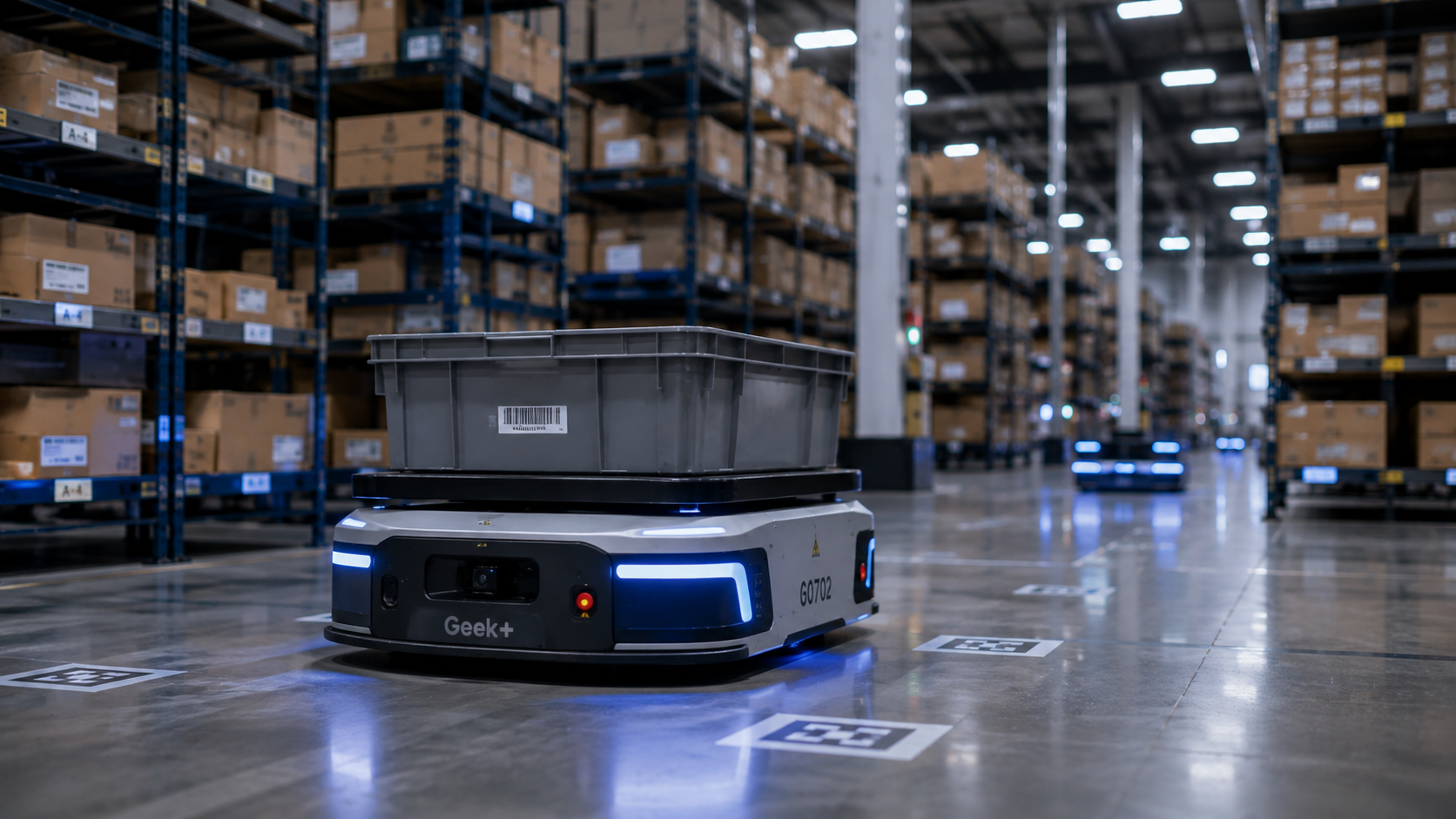
Physical AI platforms attempt to address that challenge by combining autonomous data capture, computer vision and artificial intelligence to create a continuously updated view of warehouse conditions.
Companies including Dexory, Gather AI and Corvus Robotics are developing systems designed to automate warehouse observation rather than relying solely on transaction records.
Trust in data is becoming an operational advantage
The importance of accurate information extends far beyond inventory counts.
Labour planning, replenishment timing, slotting decisions and automation workflows all depend on reliable data. When operators lose confidence in system information, productivity suffers.
According to a Zebra Technologies warehouse study, inventory accuracy remains one of the most important operational priorities for warehouse leaders globally. Meanwhile, research from Gartner continues to identify data quality as a major obstacle to successful AI and analytics initiatives.
Poor information creates a chain reaction. Workers perform additional checks. Exceptions increase. Decision-making slows. The result is a warehouse that spends more time validating information than acting on it.
Better decisions start with better information
The rise of AI across supply chain operations has created enormous interest in predictive analytics, automation and decision support. However, many warehouse leaders are discovering that advanced models cannot compensate for poor inputs.
That challenge extends beyond physical AI.
In a written response to Warehouse Insider, Keith Moore, CEO of AutoScheduler, highlighted the broader problem facing many operations. “Companies spend all this time building a data lake with a bunch of data in it that never gets used because it’s not the data that informs the decision.”
The observation reflects a growing industry reality. Warehouses are generating more information than ever before, but decision quality still depends on whether that information accurately reflects conditions on the floor.
Physical AI is not replacing warehouse teams. It is helping provide a more reliable operational picture from which those teams can work. As facilities continue to automate and scale, confidence in operational data may become just as important as the systems generating it.