Jungheinrich and Movu Robotics Partner to Push Pallet Shuttle Automation Further Into the Mainstream
 By Angela Lee · Aug 14, 2026 · 4 min read
Jungheinrich and Movu Robotics have formed a strategic partnership that will combine Movu’s four-way pallet shuttle technology with Jungheinrich’s warehouse software, integration and service capabilities, as demand for high-density automated storage continues to reshape pallet warehouse design.
Under the agreement, Jungheinrich will become the preferred integrator for Movu shuttle systems, while Movu will serve as Jungheinrich’s preferred shuttle supplier. The arrangement goes beyond a conventional equipment partnership: the companies plan to align software interfaces, solution design and service processes, effectively packaging shuttle storage as part of a broader warehouse automation architecture.
The partnership reflects an important shift in warehouse automation. As individual technologies mature, the operational challenge is increasingly moving away from selecting equipment and toward making different automation layers work as one system.
“Customers today no longer expect individual automation components, but seamless automation solutions,” said Dr Tobias Harzer, Chief Automation Officer at Jungheinrich. “Together, we combine shuttle technology, software, integration and service into an overall system that fits seamlessly into existing warehouse structures.”
Density Is Becoming an Automation Driver
The commercial logic behind the partnership is closely tied to warehouse space.
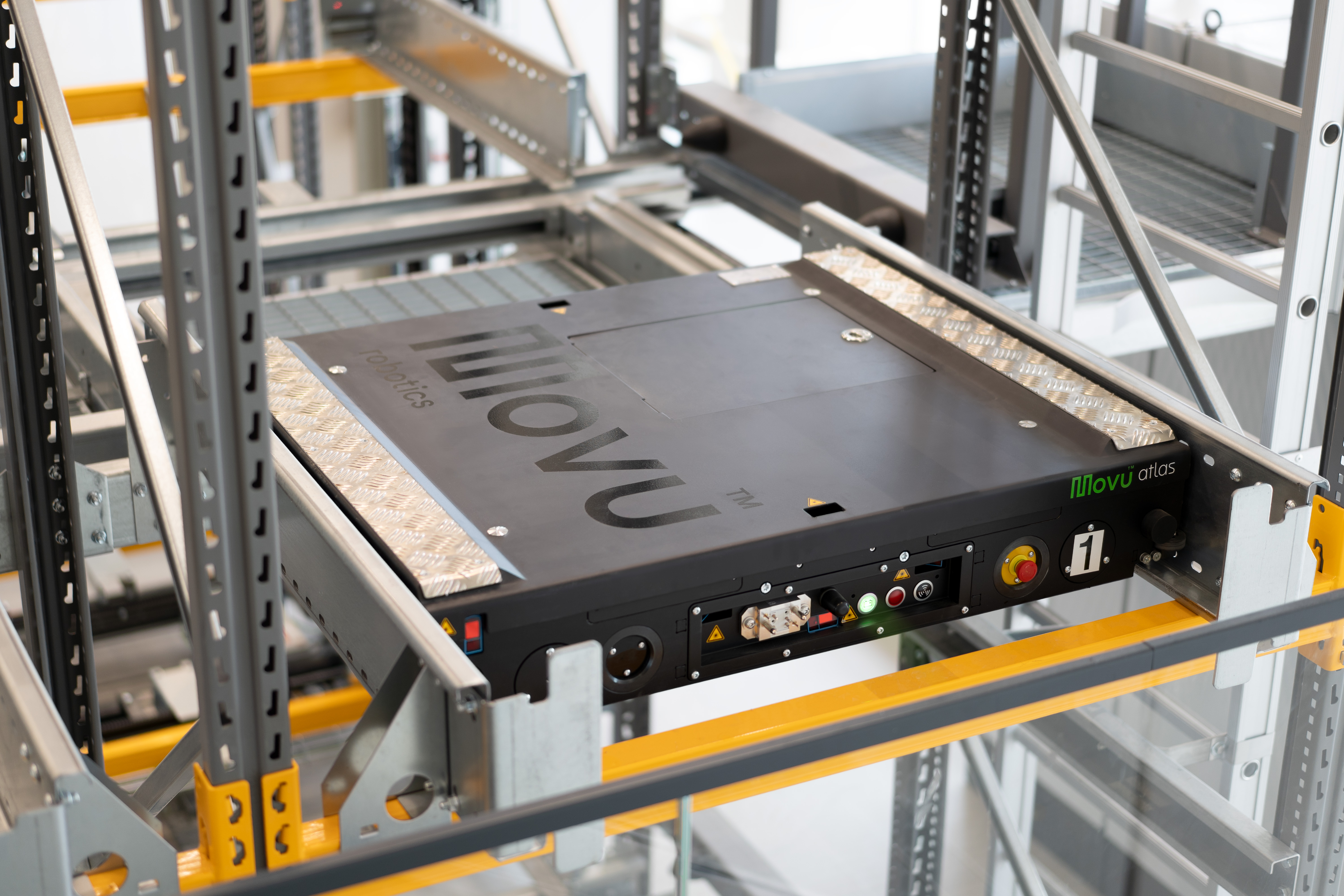
Four-way pallet shuttles can travel longitudinally and laterally within a storage structure, allowing pallets to be stored multiple positions deep without requiring conventional forklift aisles throughout the storage area. The result is greater storage density within a given building footprint.
That proposition becomes increasingly significant when expanding the physical warehouse is expensive, slow or simply impossible. Brownfield facilities create an additional challenge because automation must often be engineered around existing structures, workflows and material-handling equipment.
Jungheinrich identifies food and beverage, cold-chain logistics and 3PL operations as areas where demand is particularly strong. “Especially in sectors such as food & beverage, cold-chain logistics and 3PL, we are seeing sharply growing demand for high-density shuttle solutions,” Harzer said.
The cold-chain application is particularly intuitive from an operational perspective: every additional cubic metre of temperature-controlled warehouse space carries costs beyond the building itself, making storage density an important component of facility economics.
The Integration Layer Becomes More Important
The partnership also illustrates how warehouse automation competition is moving beyond hardware specifications. Movu provides the shuttle technology and racking manufacturing capabilities through its position within stow Group. Jungheinrich brings warehouse management software, integration, consulting and service, alongside other material-handling technologies.
The companies intend to integrate Movu’s four-way shuttles directly into the Jungheinrich WMS and software environment. Standardised interfaces are intended to reduce the engineering required during implementation and shorten commissioning, while joint solution design should accelerate the quotation and planning stages.
For operators, that could matter as much as shuttle speed or storage density. Automated warehouses increasingly contain several interacting systems - conveyors, autonomous mobile robots, storage equipment and warehouse software - creating additional integration points and potential operational dependencies. The partnership therefore effectively treats the shuttle not as a standalone storage machine, but as one node within an orchestrated material flow stretching from goods-in to dispatch.
From Storage System to Flow Engine
Movu argues that this distinction is becoming increasingly important as shuttle systems take on functions beyond simply putting pallets into storage. “Four-way shuttle systems increasingly combine high-density storage with other functionalities like replenishing picking processes and sequencing goods for dispatch just in time, all within the same footprint,” said Noë van Bergen, CSO of Movu Robotics.
That changes the role of the automated pallet store. Instead of functioning primarily as inventory capacity, it can become an active buffer between inbound inventory, picking and outbound operations. Sequencing is particularly significant. A system capable of releasing pallets in the order required downstream can potentially reduce staging requirements and simplify the handoff between storage and dispatch. It also makes software orchestration more important because physical storage decisions become directly connected to warehouse execution. Movu says its shuttle systems are already deployed in more than 200 warehouses across Europe and North America.
Existing projects also indicate the scale at which the partnership is being applied. At Mascot online in Almere, the Netherlands, an automated warehouse currently under construction will contain approximately 11,500 pallet locations, served by 10 Movu four-way shuttles.
Another project at Coppenrath & Wiese is consolidating previously decentralised packaging-material storage into a single automated facility.
A Broader Shift Toward Single-System Accountability
Perhaps the most important implication of the agreement is commercial rather than technological. Warehouse operators purchasing increasingly complex automation face a familiar problem: when hardware, controls, WMS software and integration originate from different suppliers, responsibility can become fragmented when performance falls short.
The Jungheinrich-Movu model moves in the opposite direction. Movu remains the specialist technology provider, while Jungheinrich assumes the broader integrator role across software, material flow and service.
“With this strategic partnership, we combine Movu’s innovative shuttle technology, its racking manufacturing capabilities as part of stow Group, and Jungheinrich’s integration, software and service expertise,” van Bergen said.
The partnership therefore represents more than another addition to the pallet-automation market. It points toward a warehouse technology landscape in which specialised robotics companies can retain their technological focus while major integrators increasingly become the layer through which customers purchase, connect and operate those technologies.
For warehouse operators, the differentiator may consequently become less about which individual robot performs a task fastest and more about how quickly an entire automated system can be designed, commissioned and made to work reliably as one operation.