BBC: Chinese Robots Reshape UK Retail Warehouses
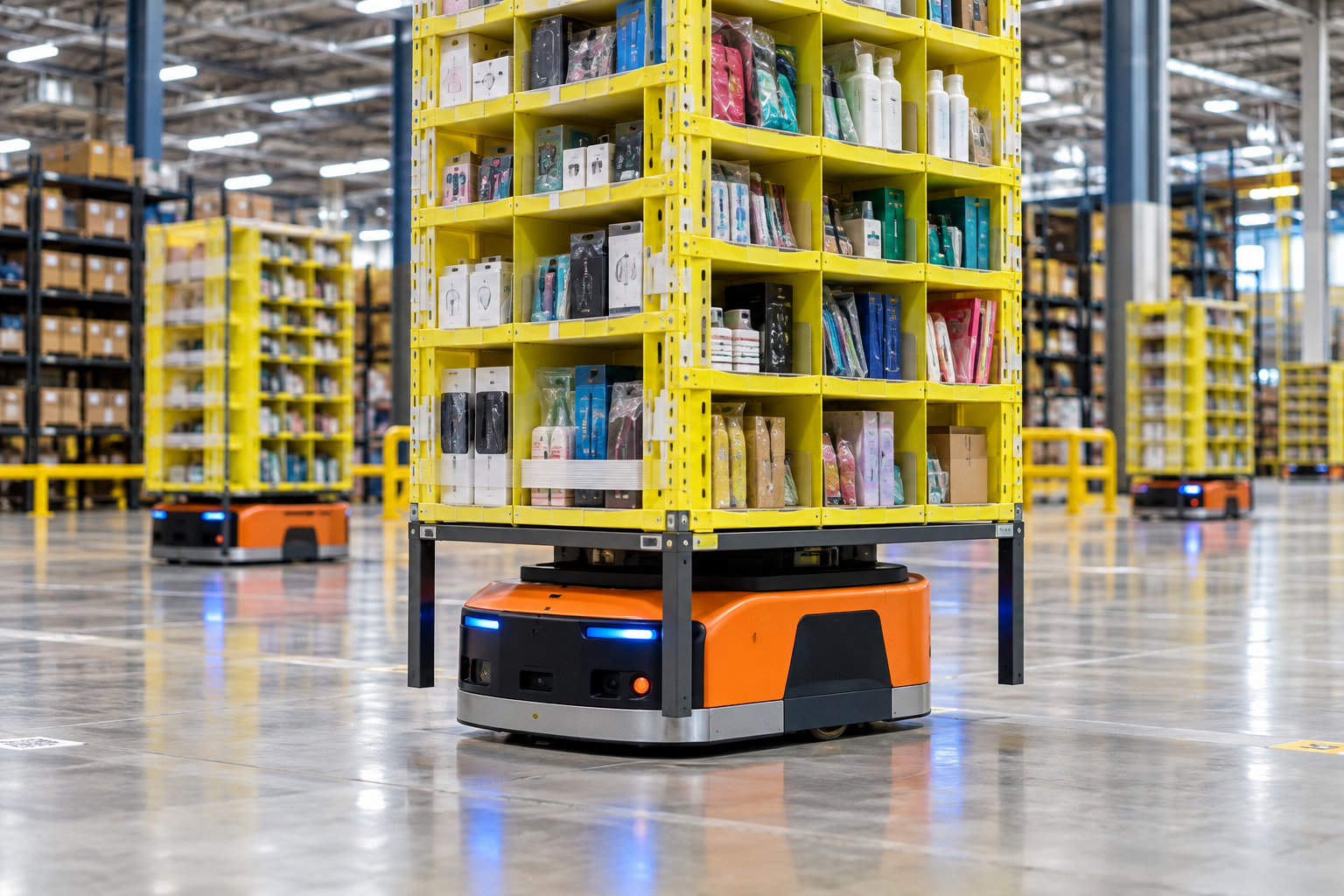
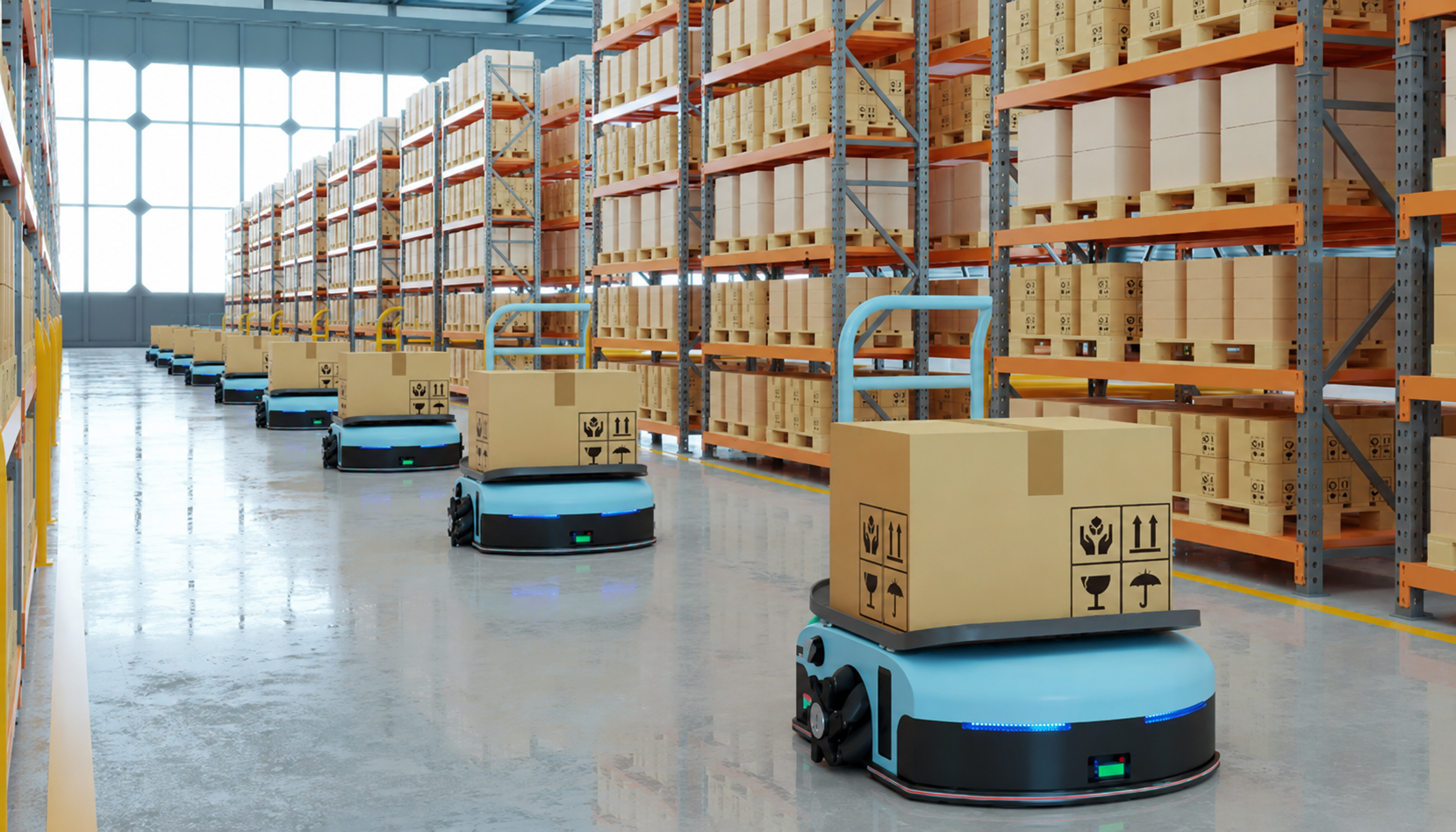
Chinese autonomous mobile robots from Geek+ are reshaping warehouse operations for major UK retailers including Tesco, Asda and Next. More than 2,000 of these robots operate across 10 UK sites through partner MotionTech, lifting and transporting entire storage shelves directly to workers instead of requiring employees to walk warehouse aisles.
The BBC recently highlighted the trend after visiting Geek+’s manufacturing facility in Hefei, China, where the robots are assembled and tested before being exported worldwide. Unlike traditional fixed conveyor systems, the robots require only QR codes on the warehouse floor and designated safety zones, allowing retailers to deploy automation more quickly while retaining flexibility to reconfigure warehouse layouts as business needs evolve.
Geek+ argues that warehouse automation is no longer simply about replacing manual travel, but about creating scalable fulfilment operations. "We apply advanced robotics and AI technologies to realize flexible, reliable and highly efficient solutions for warehouses and supply chain management," the company says, describing autonomous mobile robots as a platform that enables customers to adapt rapidly to changing order volumes and operational requirements.
The operational results reported by retailers are substantial. At ASDA, a fleet of 60 Geek+ sorting robots processes up to 2,000 parcels per hour while achieving 99.99% sorting accuracy, enabling higher throughput without expanding warehouse space.
Similarly, Next deployed 250 Geek+ autonomous mobile robots across its fulfilment operations. According to the company, the installation has doubled warehouse productivity, supports processing of more than 16,000 products per day, and helps maintain same-day fulfilment during peak retail periods.
UK labour productivity has stagnated for over a decade. The OECD has repeatedly identified greater robotics adoption as one of the most significant opportunities to improve productivity, while labour shortages continue to pressure retailers to process growing e-commerce volumes with fewer available workers and limited warehouse space. These conditions have accelerated interest in goods-to-person automation rather than large fixed infrastructure projects.
China has made robotics a strategic national industry. Technologies originally developed for electric vehicles, including batteries, electric motors, sensors and control electronics, are increasingly being applied to warehouse automation. Geek+ has emerged as the world's largest supplier of autonomous mobile robots, with more than 500 enterprise customers globally and the No. 1 global AMR market position for seven consecutive years, according to Interact Analysis.
Warehouse automation is advancing across Europe. As previously reported by The Supply Chainer, Amazon's next-generation Proteus robot, demonstrated in London, responds to natural-language instructions. "You tell it what needs to be done. It figures out the priority, the route, the timing. It becomes your assistant for material movement." The system is positioned as a tool for improving safety, reducing physically demanding work and increasing fulfilment efficiency.
Chinese autonomous mobile robots are already proving their value inside British distribution centres. As adoption expands among leading retailers, the UK is increasingly becoming an early proving ground for the next generation of Chinese warehouse robotics before broader deployment across Europe.